Your website is often the first interaction someone has with your business.
And for most business owners, there’s an assumption:
“If nothing is obviously broken, it’s probably fine.”
But that’s rarely the case.
Most websites aren’t broken.
They’re just underperforming.
And that’s exactly where a website audit becomes one of the highest ROI steps you can take.
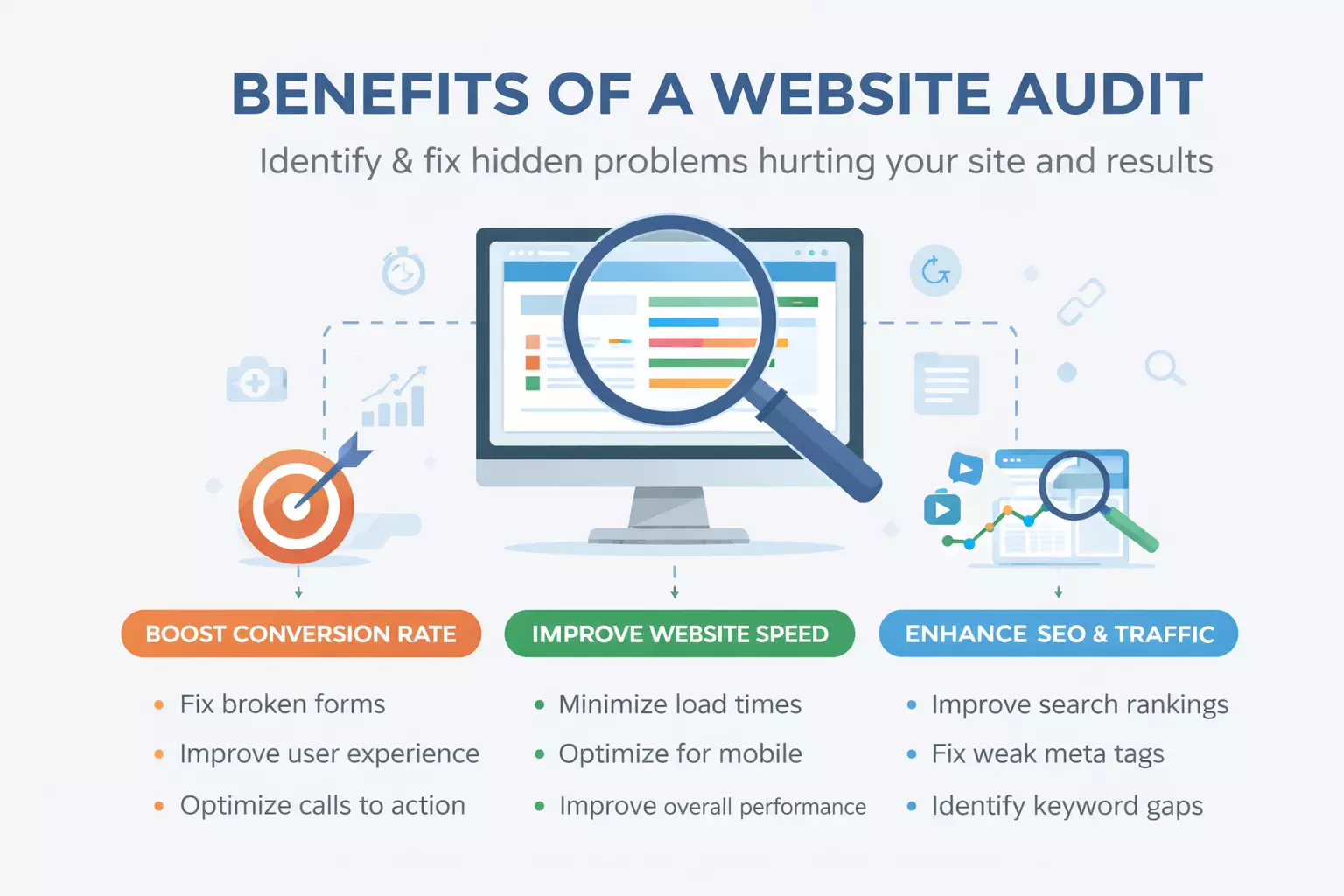
What a Website Audit Actually Is
A website audit is a full review of how your site is performing—technically, visually, and functionally.
Not just how it looks, but how it works.
It looks at things like:
- Speed
- Structure
- Search visibility
- User experience
- Technical issues
Think of it less like a quick scan and more like a diagnostic.
Because the goal isn’t just to “check boxes.”
It’s to understand what’s helping your site—and what’s quietly working against it.
Most Websites Aren’t Broken—They’re Underperforming
This is where a lot of people get stuck.
They assume if their website loads and looks decent, there’s nothing to fix.
But in most website audits, there are always a few things that stand out right away.
Things like:
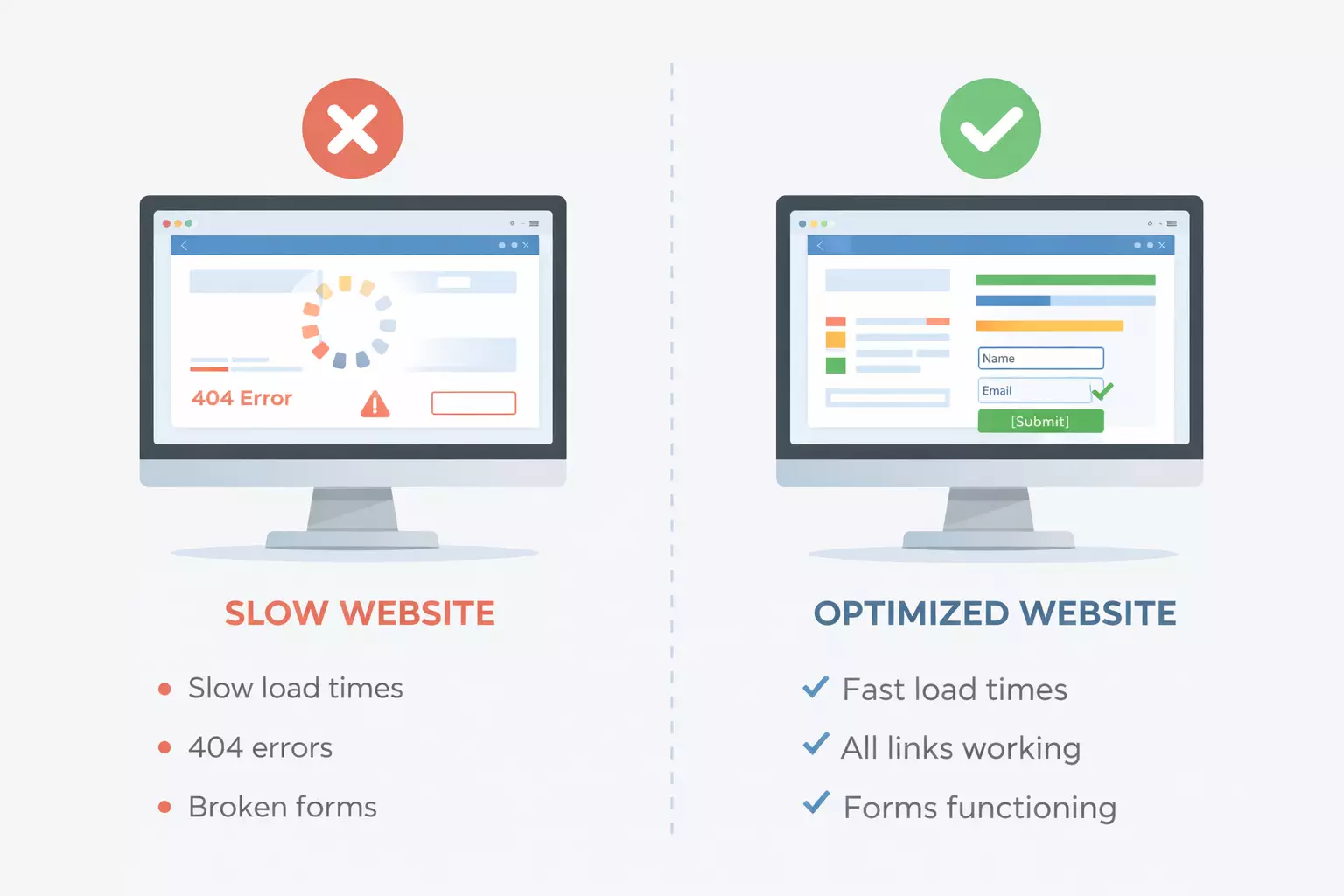
- Pages that take just a little too long to load
- Forms that aren’t submitting correctly
- Navigation that makes users hesitate
- Mobile layouts that don’t quite hold up
- SEO gaps that limit visibility
None of these feel catastrophic on their own.
But together, they create friction.
And friction is what causes people to leave without taking action.
The Cost of Leaving It Alone
The tricky part is that most of these issues don’t announce themselves.
You don’t always see the missed leads.
You don’t get notified when someone gives up halfway through your site.
It just… happens.
Over time, that adds up.
In most audits, we uncover at least a few issues that are directly impacting conversions—often things the business owner had no idea were happening.
And in many cases, the fixes are smaller than expected.
But the impact isn’t.
What a Proper Audit Looks At
A solid website audit doesn’t just focus on one area. It looks at how everything works together.
That usually includes:
Performance
How quickly your site loads and where it slows down
SEO
How your site is structured and whether it’s set up to be found
Usability
How easy it is for someone to move through your site and find what they need
Technical health
Broken links, outdated elements, and anything interfering with functionality
Because a website doesn’t fail in one place.
It underperforms across multiple small ones.
Audits Aren’t Just for “Bad” Websites
Another common assumption is that audits are only necessary for websites that are clearly struggling.
But even strong websites benefit from regular audits.
Things change:
- Search engines update
- Devices change
- User expectations shift
What worked a year ago might not be working the same way now.
An audit helps you stay ahead of that instead of reacting after performance drops.
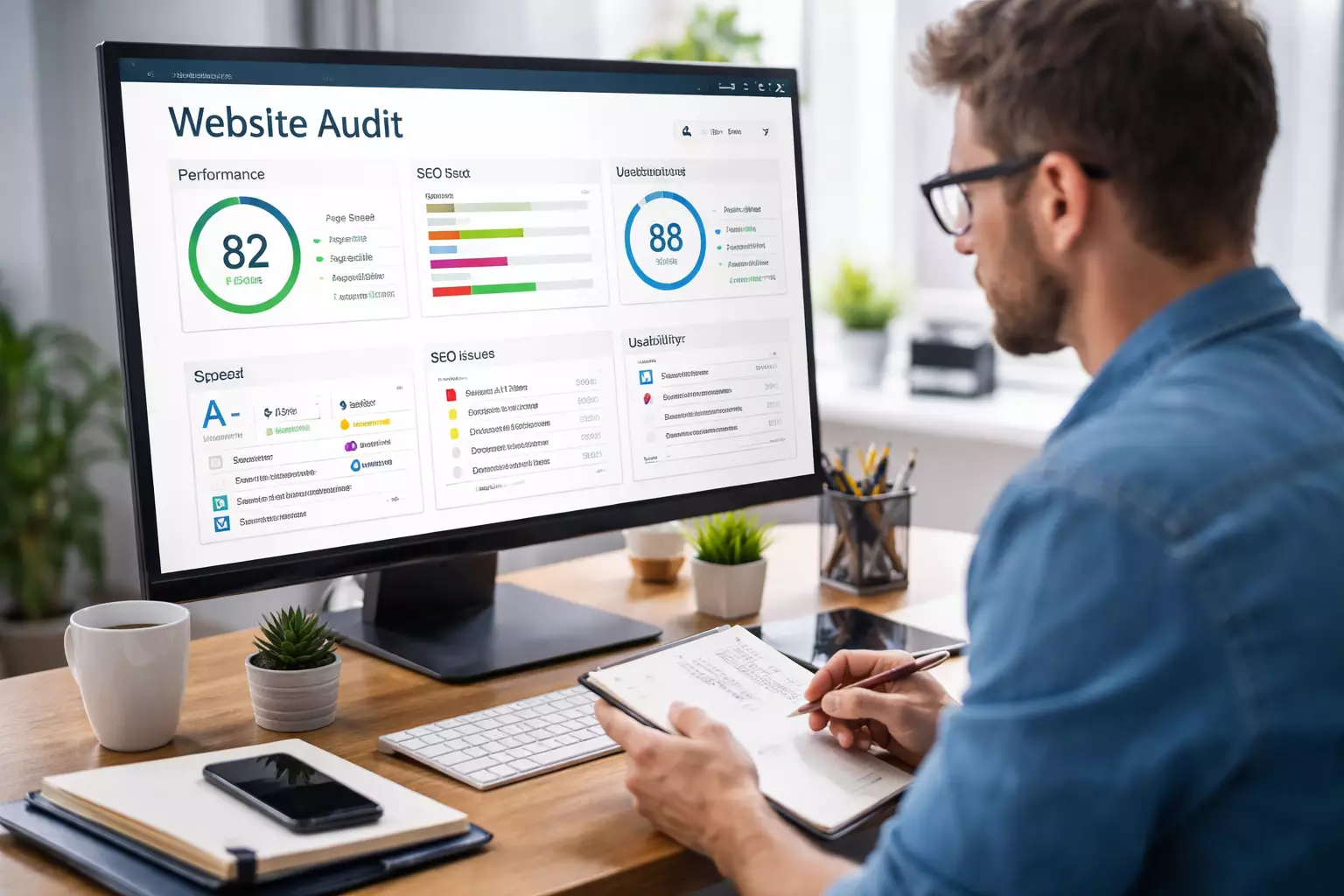
Start with a Free Automated Website Audit
This is where things have changed in a good way.
You no longer have to wait days or weeks to get initial insight into your website.
A free automated audit can give you immediate visibility into:
- Performance issues
- SEO gaps
- Usability concerns
But here’s the part most people don’t realize:
The data is only half of the value.
Knowing what to do with it—and what actually matters—is where real ROI comes from.
Conclusion
A website audit isn’t just about finding problems.
It’s about understanding where your website is helping your business—and where it’s quietly holding it back.
Most websites don’t need a full rebuild.
They need clarity.
And that’s why audits consistently deliver one of the highest returns on investment.
Because they show you exactly where to focus.
Ready to See What Your Website Is Really Doing?
If you’re not sure what your website is doing well—or what it’s quietly costing you—start with a free automated audit.
You’ll get immediate insights into performance, SEO, and usability so you can see exactly where improvements are needed.
👉 Run your free audit here: https://bluedobiedev.com/contact
If you want help understanding the results or deciding what to fix first, we can walk through it together.